
Microcement has become increasingly popular in modern interior design.
Its seamless appearance, minimalist texture and wide range of colors make it a popular choice for residential projects, hotels, restaurants, commercial spaces and high-end interiors.
But there is one common concern:
What happens after the beautiful microcement surface starts being used every day?
Especially with pure white microcement, designers and contractors may worry about dirt, stains, water marks and daily wear.
The good news is that the solution does not necessarily mean changing the microcement itself.
The Key Is the Protective Topcoat
The performance of a microcement system depends not only on the microcement material, but also on substrate preparation, application, curing and the final protective layer.
For projects that require better surface protection, one effective approach is:
Microcement + Waterborne Polyurethane Clear Topcoat
After the microcement has been properly applied and is ready for coating, a compatible clear polyurethane topcoat can be applied as a protective layer.
The transparent finish helps protect the decorative surface while keeping the original appearance of the microcement.
1. Better Stain Resistance
A suitable clear topcoat creates a protective barrier over the microcement surface.
This can help reduce direct penetration or adhesion of everyday contaminants and make common stains easier to clean.
This is especially valuable for white and light-colored microcement.
White doesn’t have to mean difficult to maintain.
The key is having a surface that is easier to clean and maintain.
2. Improved Wear Resistance
Floors in homes, hotels, shops and offices are exposed to daily foot traffic and abrasion.
A suitable polyurethane protective layer can improve the surface’s resistance to everyday wear and help protect the decorative finish.
3. Better Water Resistance
A polyurethane clear coat can also improve the surface’s resistance to water and everyday cleaning.
However, it is important to understand the difference between surface water resistance and structural waterproofing.
A clear topcoat is a protective surface coating. It should not be considered a replacement for a complete waterproofing system in showers, continuously wet areas or areas subject to standing water.
4. Keep the Original Microcement Look
One of the biggest advantages of a clear topcoat is that it protects the surface without covering the original decorative effect.
You can still keep:
- Pure white colors
- Cement-like texture
- Seamless appearance
- Minimalist design
Protect the surface without hiding the design.
Can Pure White Microcement Really Be Practical?
Absolutely — when the system is properly designed and installed.
White surfaces naturally show dirt more easily, but that does not mean they cannot be used in high-end interiors.
With a suitable protective topcoat, the surface can become easier to clean and maintain.
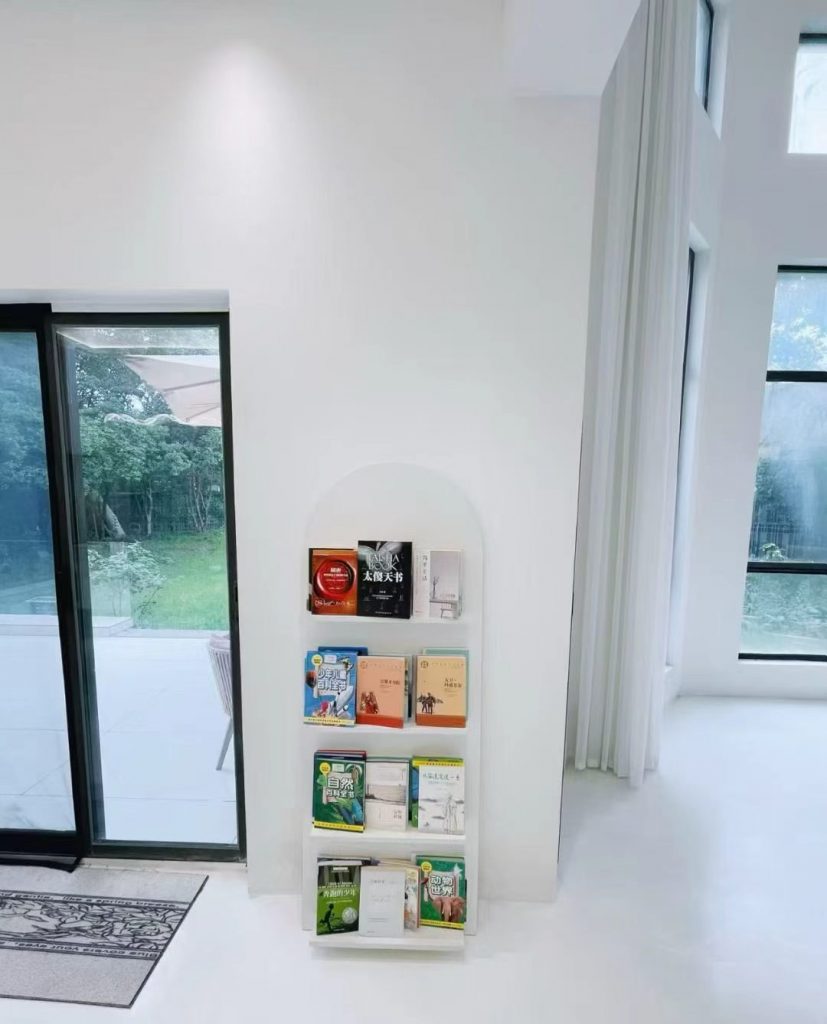
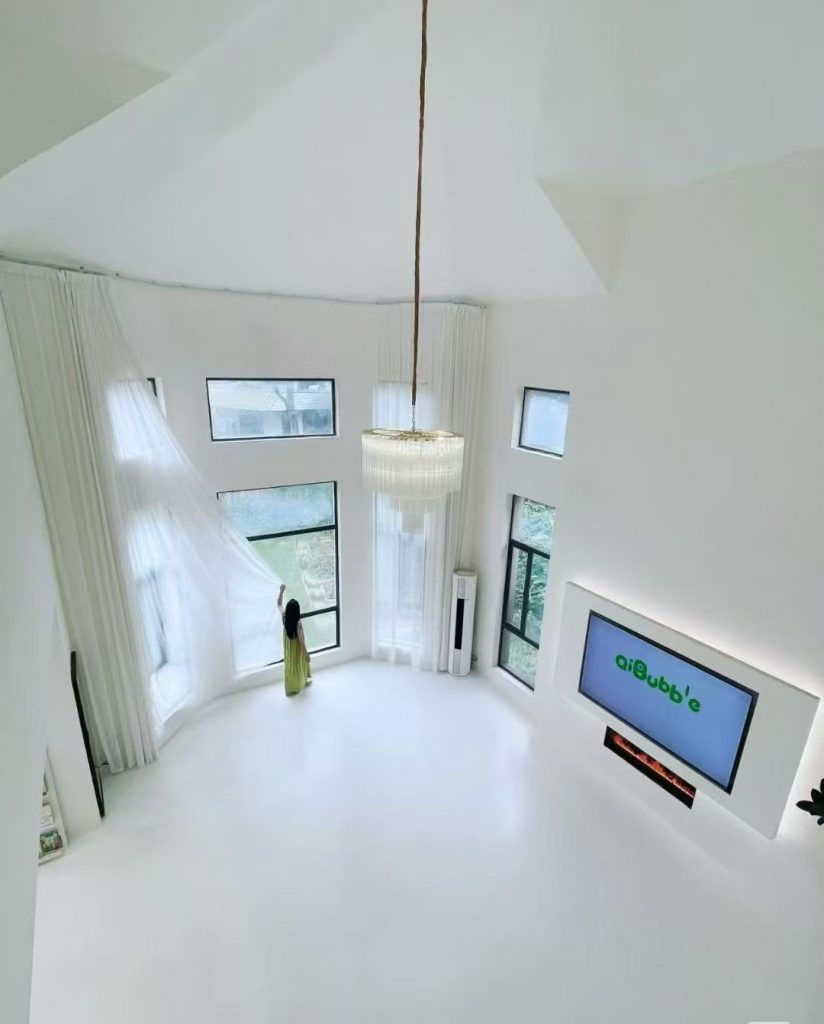
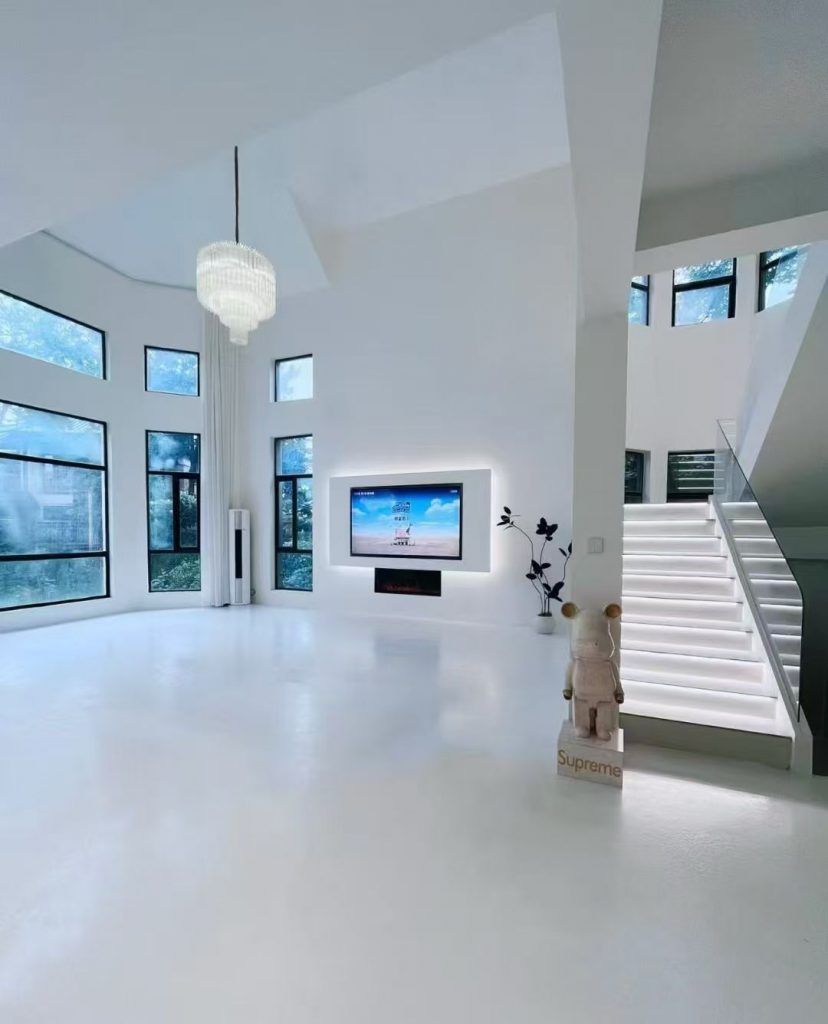
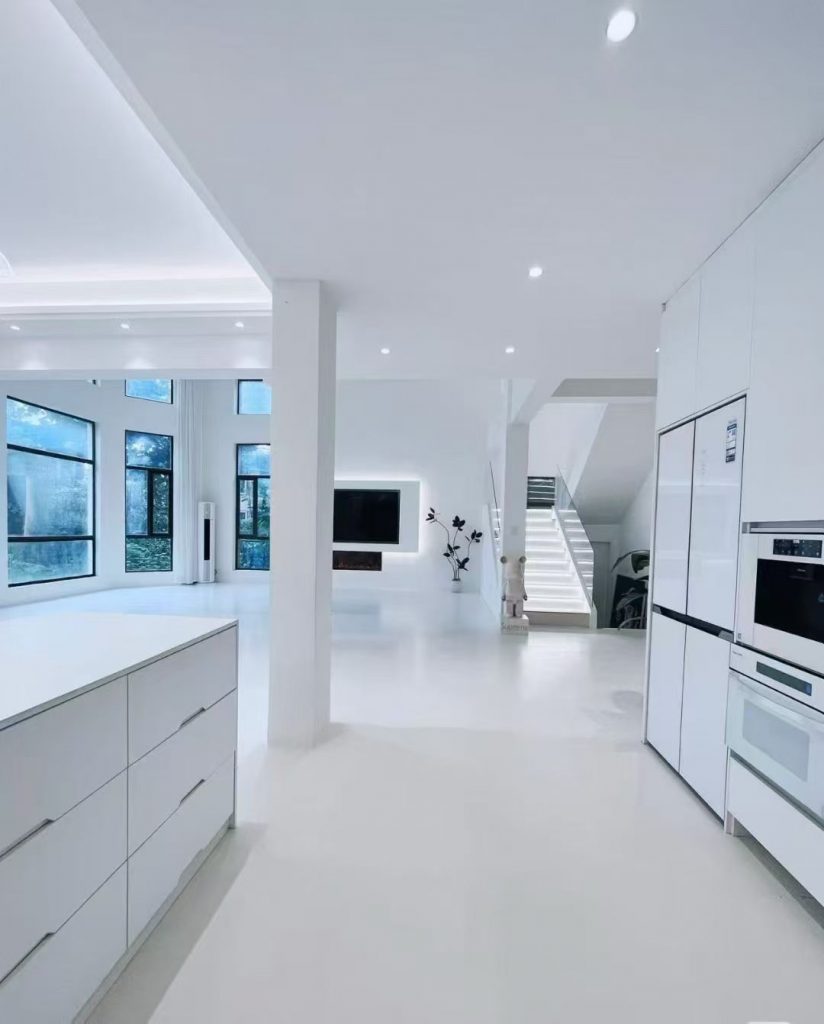
The following project photos show a clean, pure-white seamless interior finish.
Case Study | Pure White Seamless Interior
From Beautiful to Practical
A successful microcement project should not only look beautiful on the day of completion.
It should also remain practical during everyday use.
A typical protective approach can be:
Substrate Preparation → Microcement → Proper Curing → Clear Polyurethane Topcoat → Routine Maintenance
With the right materials and application system, the surface can achieve a better balance between:
Stain Resistance + Wear Resistance + Water Resistance + Easy Maintenance
Looking for a clear protective coating for microcement?
If you are a:
Microcement Contractor | Flooring Contractor | Architect | Interior Designer | Distributor
and are looking for a transparent protective coating for microcement surfaces, feel free to contact us to discuss your project requirements.
Don’t just make microcement look beautiful.
Make it easier to live with.
Thank you for you reading.Feel free to contact us for samples and quotations.
Leave a Reply