Epoxy Cracking on Your Factory Floor?
Switch to Waterborne PU Coating
(4-6H Hardness)
A Technical Comparison for Facility Managers & Flooring Contractors

Table of Contents
01. Executive Summary…………………………………………………
02. Product Overview………………………………………………….
03. Performance Comparison: PU vs Epoxy……………………
04. Application Scenarios……………………………………………..
05. Cost Analysis: Initial vs Lifecycle………………………………
06. Why Choose CNFactory………………………………………….
07. Get Your Free Sample………………………………………………
Executive Summary
For decades, epoxy has been the default choice for industrial floor coatings. It offers good hardness at a relatively low cost. However, facility managers and contractors have long struggled with its brittleness, poor UV resistance, and limited performance on damp substrates.
Waterborne polyurethane coatings have emerged as a superior alternative in many demanding applications. Unlike epoxy, polyurethane provides a unique combination of high hardness (4-6H) and excellent flexibility. This means the coating can withstand heavy forklift traffic, thermal cycling, and concrete movement without cracking or delamination.
Our waterborne polyurethane system includes primer, color coat, and topcoat—designed to work together as a complete flooring solution. It cures quickly (walkable in 8 hours), contains low VOCs, and can be applied on slightly damp concrete surfaces where epoxy would fail.
This white paper provides a side-by-side comparison of these two coating technologies, helping you make an informed decision based on real performance data, not marketing claims. We also share cost analysis and application guidelines to support your next project.
Product Overview
Our water-based polyurethane floor coating system is specifically designed for heavy-duty industrial environments. This complete system consists of three components: a penetrating primer that bonds firmly to concrete substrates, a colored topcoat that provides uniform coverage and an attractive finish, and a clear topcoat that seals the surface and offers exceptional abrasion resistance and chemical resistance.
Key Technical Specifications:
| Parameter | Value / Result | Test Method / Notes |
| Appearance | Smooth, uniform surface — no pinholes, bubbles, shrinkage, or cracking | GB/T 22374-2018 |
| Pencil Hardness | 4–6H (manufacturer’s specification, pending independent verification) | GB/T 6739-2022 |
| Drying Time | Hard dry: ≤ 8 hours | GB/T 1728-1979 |
| Abrasion Resistance (750g/500r) | Mass loss: 0.0319g (limit: ≤0.050g) | GB/T 1768-2006 |
| VOC Content | ≤ 16 g/L (limit: ≤120 g/L) | GB 18582-2008 |
| Water Resistance | 168 hours — no blistering, no lifting, no cracking | GB/T 22374-2018 |
| Alkali Resistance | Pass — no blistering, no peeling | GB/T 22374-2018 |
| Mildew Resistance (dry friction coefficient) | ≥ 0.50 | GB/T 4100-2015 |
Independent Laboratory Verification
Our coatings have passed independent testing by the following organizations:
· Shanghai Construction Science Testing & Certification Co., Ltd. — National Quality Testing Center for Construction Engineering Materials (a national-level authoritative institution in China’s building materials sector)
· ICAS Testing Technology Services (Shanghai) Co., Ltd.
Key test results: VOC content as low as 16 g/L, excellent abrasion resistance (mass loss of only 0.0319 g under a load of 750 g/500 r), and outstanding water and alkali resistance. All test results fully comply with the GB/T 22374-2018 national standard.
Application rate: Approximately 8–20 square meters per kilogram per coat (actual values may vary depending on the substrate’s porosity and application method).
The system offers a wide range of standard RAL colors and can be customized to meet specific project requirements. The product is available in 18/20-kilogram and 5/6-kilogram packages, making it suitable for both large-scale projects and sample testing.
Performance Comparison: PU vs Epoxy
Based on independent lab testing (Shanghai Jianke, ICAS) and industry-standard benchmarks.
| Parameter | Our Waterborne PU | Typical Waterborne Epoxy | Advantage |
| Pencil Hardness | 4–6H | 2–3H | ✅ PU significantly harder |
| Abrasion Resistance (mass loss, 750g/500r) | 0.0319 g | 0.040–0.060 g | ✅ PU wears slower |
| VOC Content | ≤ 16 g/L | 50–100 g/L | ✅ PU far more eco-friendly |
| Water Resistance | 168h — no blistering, no cracking | 72h — may show signs | ✅ PU lasts longer in wet conditions |
| Alkali Resistance | Pass — no blistering, no peeling | Pass — but limited | ✅ PU more chemically resistant |
| Mildew Resistance (dry friction coefficient) | ≥ 0.50 | Not commonly tested | ✅ PU offers added protection |
| Drying Time (hard dry) | ≤ 8 hours | 8–12 hours | ✅ PU cures faster |
| Flexibility | Excellent — bridges concrete cracks | Poor — brittle, prone to cracking | ✅ PU absorbs movement |
| UV Resistance | Excellent — suitable for outdoor use | Poor — yellows in sunlight | ✅ PU can be used indoors & outdoors |
| Application on Damp Substrate | Yes — can be applied on slightly damp concrete | Very limited — requires dry surface | ✅ PU more forgiving on site |
| Service Temperature Range | -10°C to 60°C | 0°C to 50°C | ✅ PU handles wider range |
| Lifecycle Cost | Higher upfront, lower long-term | Lower upfront, higher maintenance | ✅ PU saves money over time |
Independent Laboratory Verification: Our coatings have been tested by Shanghai Jianke Testing & Certification Co., Ltd. (National Quality Testing Center for Construction Materials) and ICAS Testing Technology Services (Shanghai) Co., Ltd.—both of which are authoritative institutions accredited by the Chinese government. All test results are in full compliance with the GB/T 22374-2018 national standard.
Polyurethane (PU) offers advantages such as higher hardness, lower volatile organic compound (VOC) content, faster curing, and a longer service life—all at a highly competitive upfront cost.
Application Scenarios
Choosing the right coating depends on your specific environment. Here is our practical guide.
| Epoxy is generally suitable for:· Indoor, dry environments· Projects with tight initial budgets· Areas where high gloss and decorative finish are a priority (e.g., showrooms, retail spaces)· Light foot traffic areas· Well-cured concrete substrates with low moisture content | Waterborne PU is the better choice for:· Factories & warehouses — heavy forklift traffic· Outdoor or semi-outdoor areas — UV exposure· Cold storage & baking rooms — extreme temperature swings· Food processing & pharmaceutical plants — frequent washdowns, strict hygiene standards· Underground parking & basements — damp concrete surfaces· Projects requiring low VOC — strict environmental regulations |
The rule is simple: In harsh industrial environments—such as those involving heavy loads, moisture, temperature fluctuations, or outdoor exposure—choose water-based polyurethane coatings.
Cost Analysis: Initial Investment vs. Total Lifecycle Cost
Epoxy may look cheaper on day one. But what about year three? Year five?
| Cost Factor | Typical Waterborne Epoxy | Our Waterborne PU |
| Initial Material Cost | Lower | 20-30% higher |
| Application Cost | Similar | Similar |
| Maintenance / Repairs (Year 1-3) | Frequent — cracking, peeling, yellowing | Minimal — maintains integrity |
| Downtime for Repairs | Significant — production stops | Almost none |
| Total Cost (Year 1-3) | Higher | Lower |
| Expected Service Life | 3-5 years | 8-10 years |
| Cost per Year of Service | Higher | Lower |
Conclusion: Although polyurethane has a higher initial cost, its service life is two to three times longer than that of other materials, and it requires fewer repairs. Over a five-year period, it is the more cost-effective choice.
Actual costs vary depending on the project size, the condition of the substrate, and the installation method. Please contact us for a quote specific to your project.
Why Choose Shanghai Taifeng?
Factory-Direct Pricing
We manufacture our own coatings, eliminating the markup added by distributors. This means you can obtain high-quality water-based polyurethane coating systems at factory-direct prices—offering significant cost advantages for contractors and distributors who need to secure competitive pricing for their projects.
Complete System Solutions
Primer, base coat, and topcoat—all meticulously designed to work together as a seamless system. No compatibility issues, no guesswork. Each component is carefully formulated to deliver consistent and reliable performance from the first coat to the last.
Trusted Quality
Our products have been independently tested by nationally accredited institutions: Shanghai Jianke Testing & Certification Co., Ltd. (National Quality Testing Center for Construction Materials) and ICAS Testing Technology Services (Shanghai) Co., Ltd. All test results fully comply with the GB/T 22374-2018 national standard. We don’t just promise performance—we back it up with facts.
Quick Response and Reliable Support
We understand that construction schedules cannot be delayed. Our team will respond to inquiries within 24 hours, provide technical guidance for application, and ship globally from our factory in China. Whether you need samples, technical specifications, or bulk orders, we will respond promptly—because your project timeline is of the utmost importance to us.
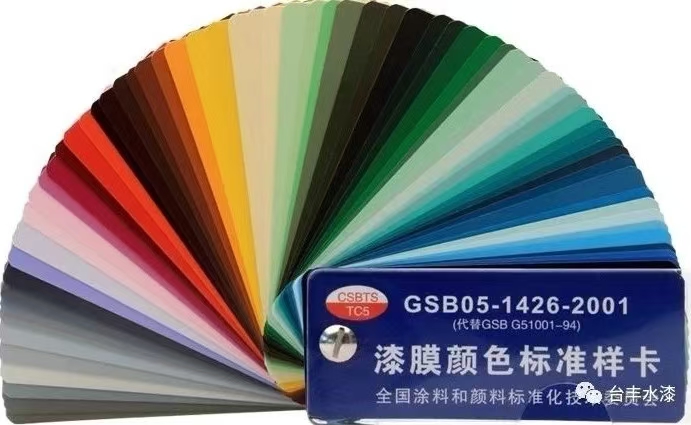
Standard Color Card for Paint Films
Ready to test the difference?
Contact us for a free sample.
WhatsApp: +86 15638124599|
Email: cnfactoryintl@gmail.com | www.cnfactoryintl.com
Leave a Reply